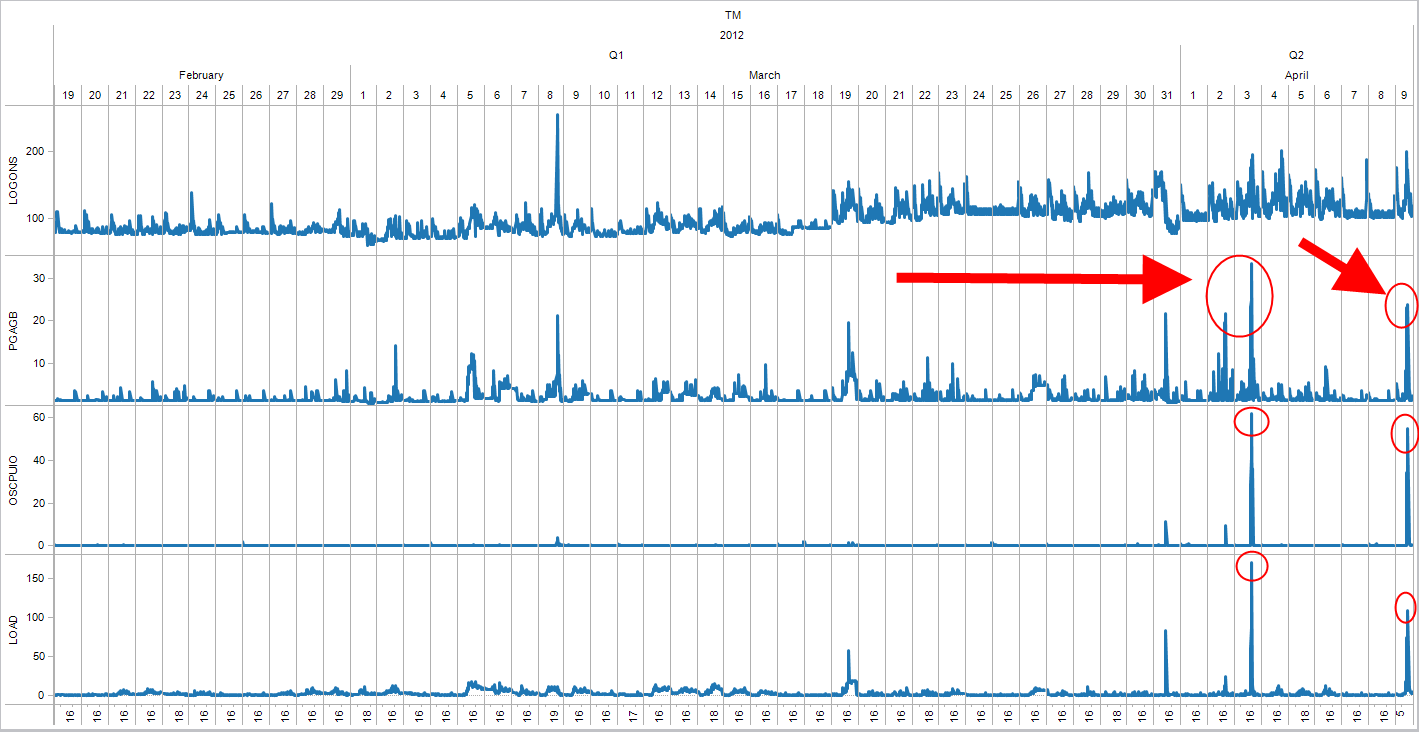
"When things go wrong they point the finger at the database or OS or
hardware" <-- yes, and when this happens it's just a matter of getting the
facts, numbers, figures and we can point the finger back to them. Take a
look at the screenshots below, they are all different scenarios where
things gone bad

PGA reaching 30GB when developers fire up new reports that's doing
tremendous hash joins eating up the server memory causing the kswapd to
kick in and swapping at a high rate which translates to CPU wait IO and
high load average.. basically killing the server
https://lh4.googleusercontent.com/-AB22fuuzLwE/T4b53Ris6QI/AAAAAAAABio/mu_dIx3A3uE/s2048/20120412-template-PGA.png


New batch of reports were introduced, and we found out that the developers
are testing stuff in the PROD environment
https://lh4.googleusercontent.com/-rPe_EbL4Md0/T4b53Zf81hI/AAAAAAAABik/g_rZFYUgj68/s2048/20120412-template-aas1-correct-detail.png


Load average spike
https://lh3.googleusercontent.com/-Pnw29AKWRSk/T4b53UOjXwI/AAAAAAAABig/LaPnAsru3rg/s2048/20120412-template-cpu-detail.png


Sudden 15GB/s read caused by just two SQLs
https://lh4.googleusercontent.com/-7rTUJIR-Rh0/T4b53qAvoqI/AAAAAAAABi8/lSMhGsF7OEc/s2048/20120412-template-iopsrw-15GBs-detail.png


And since the data points are based in AWR you can drill down on
snap_ids, generate ASH at that time period, pick the SQLs.. and regroup
with the developers ;)


--
Karl Arao
karlarao.wordpress.com
karlarao.tiddlyspot.com


--
//www.freelists.org/webpage/oracle-l